

Yosemite is famous for its waterfalls, but if you’re visiting in September, October or November, there’s one important thing to know: fall is not peak waterfall season.
That doesn’t mean the waterfalls disappear completely.
Some of Yosemite’s waterfalls flow year round, while others can slow to a trickle or dry up entirely by late summer. And once the first significant fall storms arrive, waterfall conditions can change surprisingly quickly.
Here’s what you can expect from Yosemite’s waterfalls during a fall visit.
Why Are Yosemite’s Waterfalls Lower in Fall?
Most of Yosemite’s famous waterfalls are powered by melting snow from the Sierra Nevada.
Peak runoff typically happens in May or June. As the snowpack disappears through summer, less water reaches Yosemite’s rivers, creeks and waterfalls. By August, Yosemite Falls may already be only a trickle or completely dry.
That’s why the Yosemite you see in September can look very different from the Yosemite you see in May.
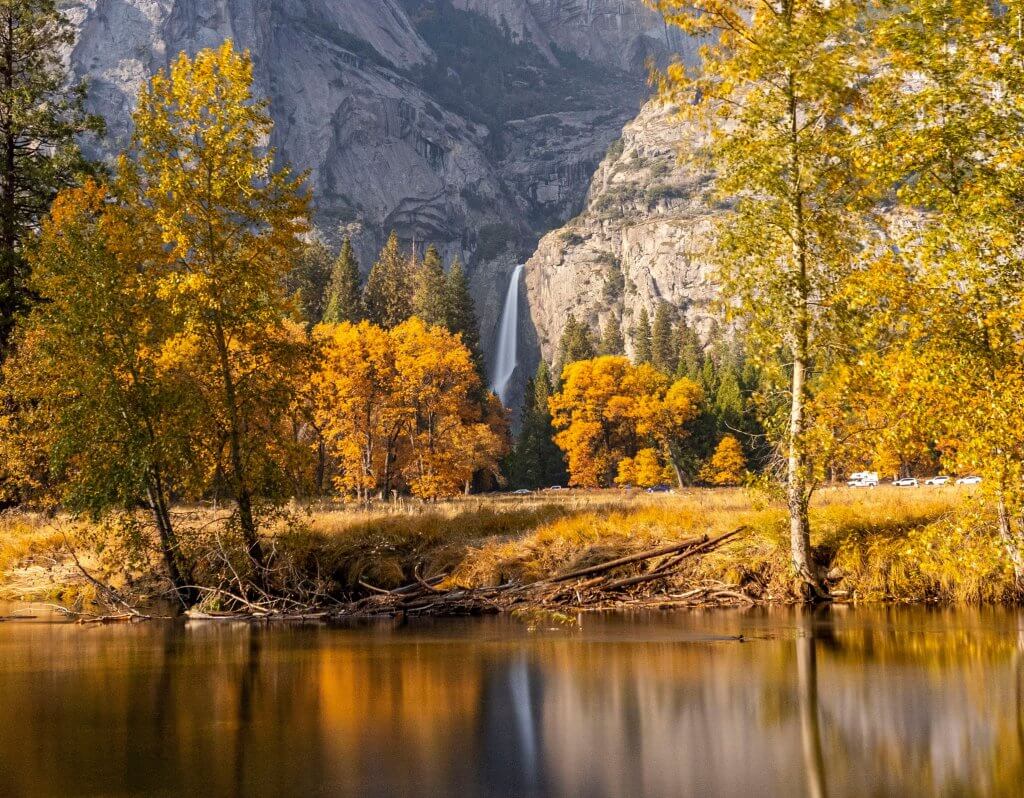
Yosemite Waterfalls in September
September is typically one of the driest times of year for Yosemite’s waterfalls. Yosemite Falls may have little to no water, depending on the year’s snowpack and weather. But several waterfalls continue flowing.
Bridalveil Fall flows year round, although its fall flow is much lighter than the powerful waterfall visitors see during spring.
Vernal Fall and Nevada Fall also flow throughout the year, but water levels are considerably lower by late summer and fall. The upside? September can bring warm days, beautiful hiking weather and a very different perspective on Yosemite’s landscape.
Yosemite Waterfalls in October
October is unpredictable, and that’s part of what makes fall in Yosemite interesting.
During a dry October, waterfalls can remain very low. Yosemite Falls may still be dry, while Bridalveil, Vernal and Nevada continue at reduced flows. But fall storms can begin to change things.
Rain can temporarily increase water levels and even bring seasonal waterfalls back to life. The National Park Service notes that storms in late fall can rejuvenate some of Yosemite’s waterfalls.
So if you’re visiting after a fall storm, Yosemite Valley may look noticeably different than it did just a few days earlier.
Yosemite Waterfalls in November
By November, Yosemite begins transitioning toward winter. Rain and early snow become more likely, and storms can increase waterfall flow. Yosemite Falls typically begins flowing again around November, although the exact timing varies significantly from year to year.
That variability is important. There really isn’t one answer to “Will Yosemite Falls be flowing in November?” It depends on that year’s weather and when the first substantial storms arrive.
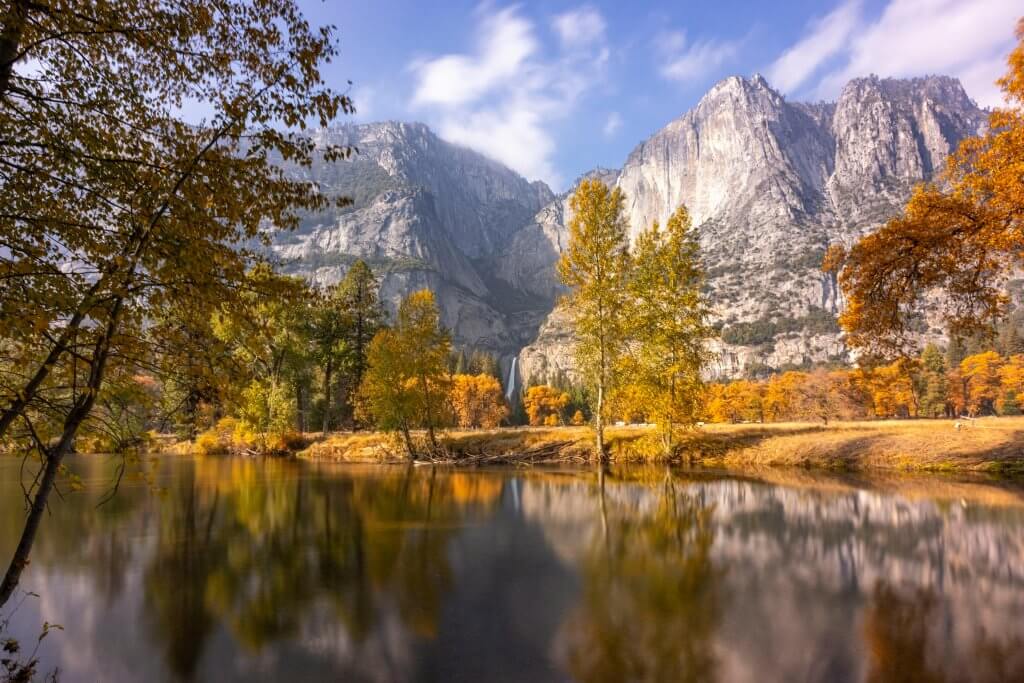
Which Yosemite Waterfalls Flow Year Round?
If seeing a waterfall is important to your fall Yosemite trip, focus on these three:
Bridalveil Fall
Flows year round and is one of the easiest waterfalls to visit in Yosemite Valley.
Vernal Fall
Flows throughout the year, although it becomes considerably narrower as water levels decrease.
Nevada Fall
Also flows year round and can be viewed from several locations, including Glacier Point when the road is open.
Just remember that “year round” doesn’t mean “full.”
Fall waterfalls can look dramatically different from their roaring spring versions.
Is Yosemite Still Worth Visiting When the Waterfalls Are Low?
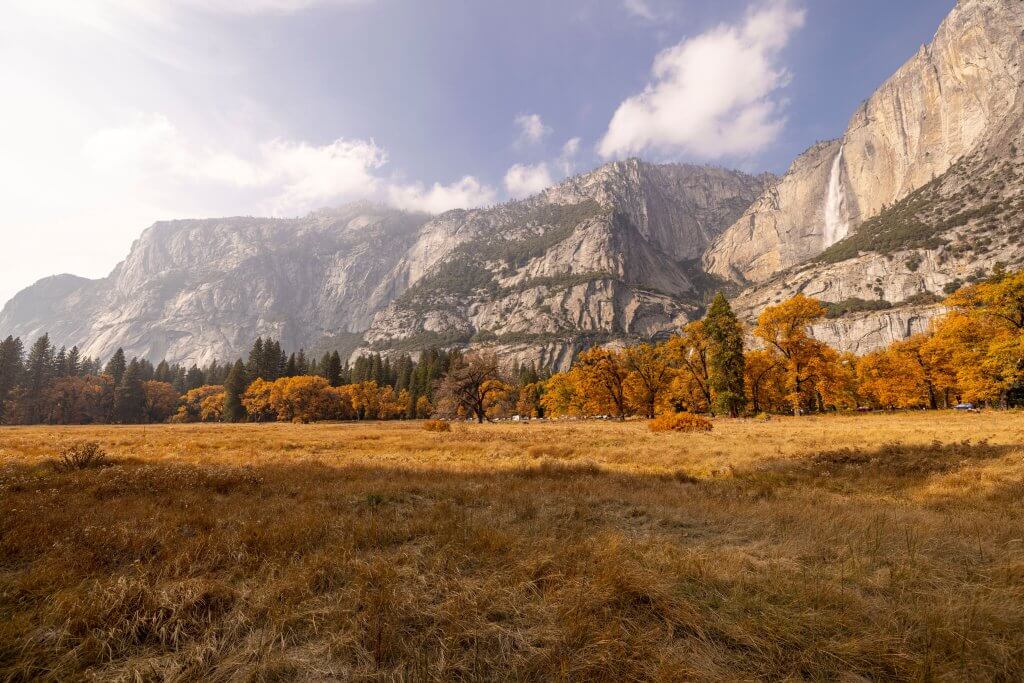
Absolutely – Fall simply offers a different version of Yosemite. Instead of planning your entire trip around peak waterfalls, this is a season for hiking in cooler temperatures, watching the leaves change throughout Yosemite Valley, exploring the Merced River and enjoying some of the park’s most famous viewpoints with fewer visitors than peak summer.
September often still feels like summer during the day. October brings more fall color. And November can offer everything from crisp sunny afternoons to the first snow of the season.
And sometimes, arriving just after a fall storm means getting an unexpected waterfall show too.
Where to Stay for a Fall Yosemite Trip
Yosemite View Lodge sits along the Wild and Scenic Merced River in El Portal, just outside Yosemite National Park’s Arch Rock Entrance.
Its location makes it easy to check conditions and head into Yosemite Valley for the day without a long commute to the park.
Fall is also a great time to enjoy the property itself. Cooler evenings make the riverfront setting, hot tubs, fireplaces and spa tubs especially inviting after a day of exploring Yosemite.
Yosemite Fall Waterfall FAQs
Does Yosemite Falls flow in September?
Sometimes, but it may be extremely low or completely dry by September.
Which Yosemite waterfalls still have water in October?
Bridalveil Fall, Vernal Fall and Nevada Fall flow year round, although their fall flows can be very low.
Does Yosemite Falls come back in November?
It can. Fall storms can restore waterfall flow, and Yosemite Falls typically begins flowing again around November.
What is the best season to see Yosemite’s waterfalls?
Spring is the best season for waterfalls, with peak runoff generally occurring in May or June. Fall offers much lower flows but cooler temperatures, changing leaves and fewer visitors.