
Yosemite National Park is not a one‑season destination. The best time to visit Yosemite depends entirely on what you want to experience while you are here. Waterfalls, snow sports, hiking, photography, wildlife, and crowd levels all peak at different times of year. Choosing the right season can completely change how your trip feels.
This guide breaks down the best time to visit Yosemite based on your priorities, so you can plan with intention instead of guessing.
If You Want to See Waterfalls at Their Peak
Late spring through early summer is the prime season for waterfalls. Snowmelt from the Sierra Nevada feeds Yosemite’s rivers, creating dramatic flows across the park.
Best months: May and June
What to expect:
• Yosemite Falls, Bridalveil Fall, and Sentinel Fall are roaring
• Rivers run high and fast
• Some high‑elevation roads and trails may still be closed due to snow
This is the most visually impressive time of year, but also one of the busiest. If waterfalls are your main goal, plan for early starts and weekday visits when possible.
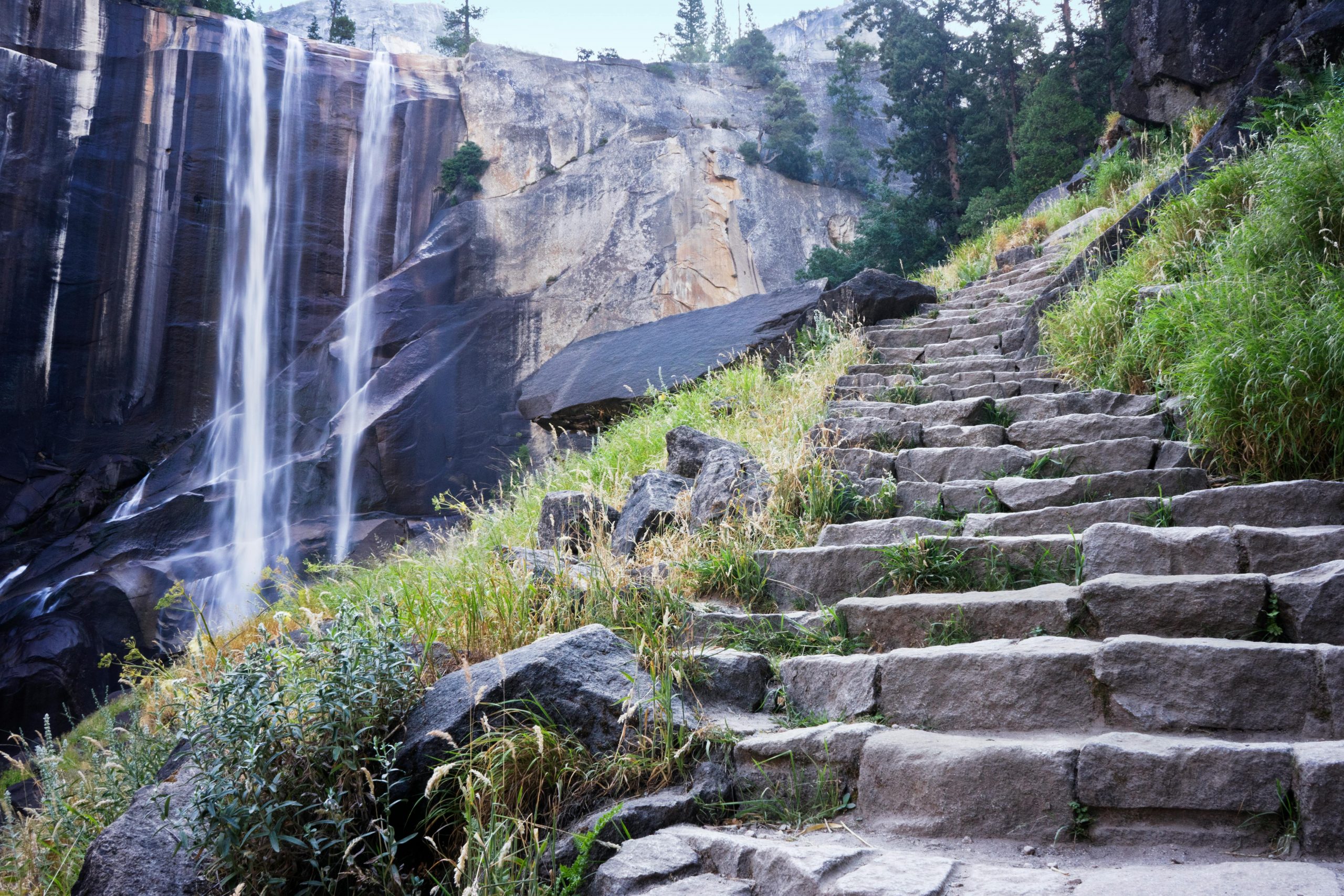
Vernal Falls, Mist Trail
If You Want to Hike and Explore Trails
Summer is ideal for hiking, especially if you want access to Yosemite’s high country.
Best months: July through September
What to expect:
• Most trails fully open, including higher elevation routes
• Dry conditions and predictable weather
• Fewer waterfalls compared to spring, but clearer trails
By mid‑summer, snow has melted from most routes, making it the best time for longer hikes and backpacking trips. Afternoon thunderstorms are possible, so starting early is key.
If You Want Fewer Crowds and a Quieter Experience
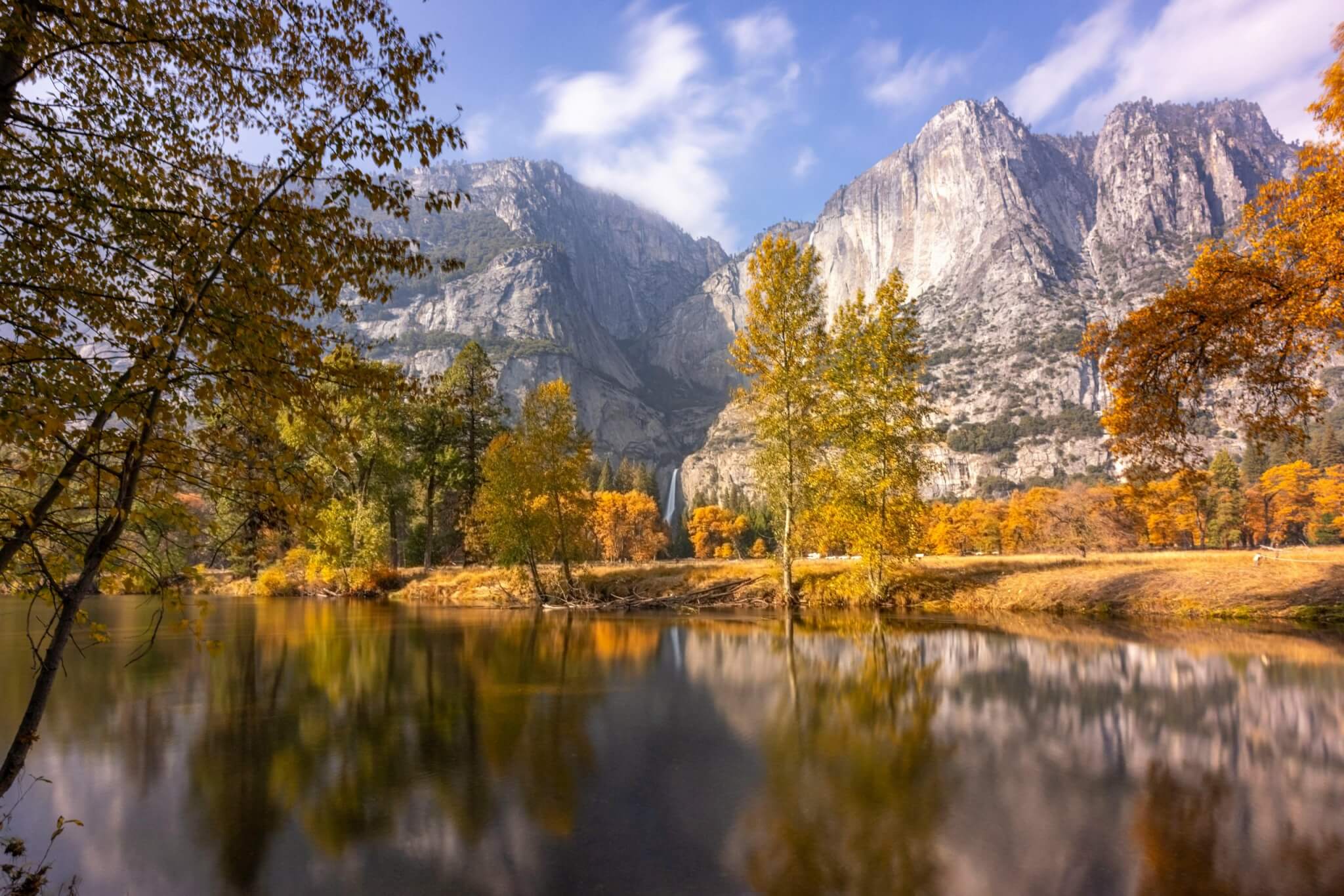
Fall is one of Yosemite’s most underrated seasons.
Best months: Late September through October
What to expect:
• Fewer visitors and easier parking
• Cooler temperatures, especially at night
• Limited waterfalls and fewer services as some areas begin to close
While you will not see peak waterfalls or wildflower blooms, fall offers a calmer, more reflective Yosemite experience. It is ideal for travelers who value space, solitude, and crisp mountain air.
If You Want Snow, Skiing, and Winter Scenery
Winter transforms Yosemite into a snow‑covered landscape.
Best months: December through February
What to expect:
• Snowshoeing, cross‑country skiing, and downhill skiing
• Snow‑covered meadows and frozen waterfalls
• Road closures and chain requirements possible
Winter is perfect for visitors who love snow and do not mind adjusting plans around weather. Yosemite’s winter beauty feels peaceful and dramatic, especially after a fresh snowfall.
If You Want Wildflowers and Mild Weather
Spring brings new life to Yosemite, though conditions can vary widely.
Best months: April through early June
What to expect:
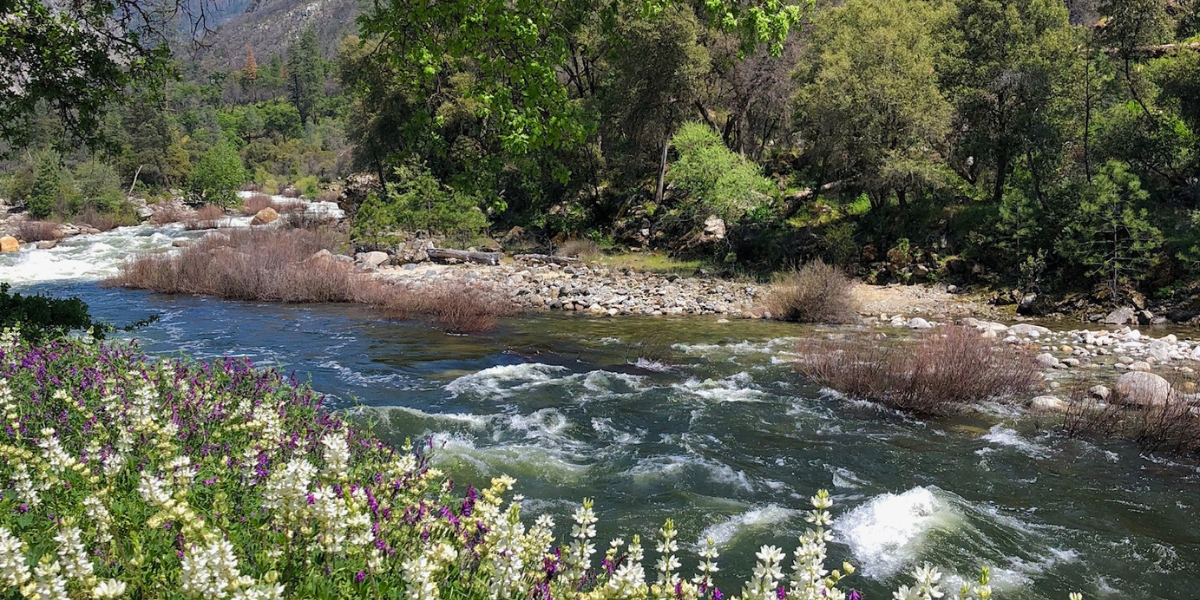
• Wildflowers and superblooms at lower elevations
• Increasing waterfall flow as snow melts
• Unpredictable weather and lingering snow at higher elevations
Spring is a transitional season. It rewards flexible travelers who are comfortable with changing conditions and partial road access.
If You Want the Best Overall Balance
For many visitors, early May and September offer the best mix of access, scenery, and manageable crowds.
These shoulder periods often provide:
• Strong waterfall flow or accessible trails
• More moderate temperatures
• Slightly fewer crowds than peak summer
Choosing the Right Time for You
There is no single best time to visit Yosemite. The best time is the one that matches what you want to experience.
Ask yourself:
• Do you care more about scenery or solitude?
• Are you comfortable with snow or road closures?
• Do you want to hike, ski, or simply take in the views?
Once you know your priorities, choosing the right season becomes much easier. No matter when you visit, Yosemite offers something unforgettable. Planning around your goals ensures you experience the park at its best for you.